Los Angeles
On the RoadLos Angeles is both a destination imagined from the road and a difficult place to remain. Sal reaches it after a cold, unsuccessful hitchhiking stretch, finds intimacy and temporary companionship with Terry, and then discovers that the city’s promise of opportunity offers them no dependable work. Its crowded streets and brilliant lights do not overcome the loneliness he associates with the city; instead, Los Angeles becomes a vivid but unstable pause in a life organized around movement.
Arrival and the promise of the West
Sal’s approach to California begins with a map and a westward dream. He has studied the long red line of Route 6, imagining Chicago, Denver, and San Francisco as stages of a journey toward the Pacific. The route proves less orderly than the map: rides carry him through the plains and mountain country, while the open road makes progress depend on strangers, weather, and luck.
South of Bakersfield, the journey stalls. In a three-dollar Army raincoat, Sal waits in the cold before an illuminated Spanish-style motel while Los Angeles-bound cars rush past. After standing there for two hours, he gives up on hitchhiking and spends a little over two dollars on a bus for the remaining miles. The arrival is purchased not through a triumphant final ride but through dwindling money and fatigue.
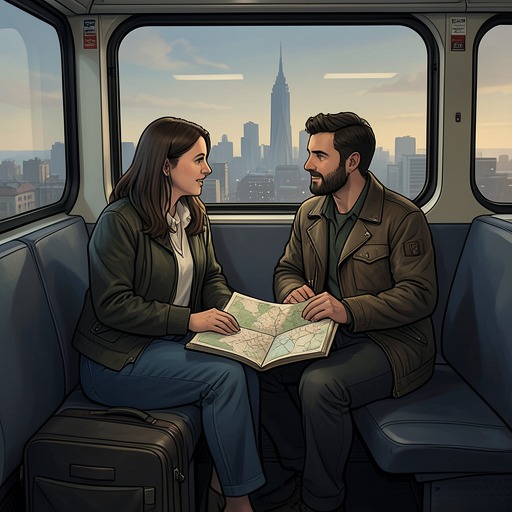
At the Bakersfield station, Sal notices Terry on a bus making a rest stop. He wishes he were on her bus, then discovers her sitting alone opposite him when he boards for Los Angeles. His loneliness and exhaustion give way to the nerve to approach her. Their chance meeting turns the journey’s endpoint into the beginning of a relationship: Sal imagines that she will be beside him in his Los Angeles hotel room, and they travel onward together.
A brief life with Terry
In the gray dawn, Terry sleeps in Sal’s lap as the bus enters Hollywood. Sal looks out at stucco houses, palms, and drive-ins, seeing a ragged, fantastic promised land. The impression is already divided: the scenery announces arrival, but the bus lets them off on Main Street among red brick, trolleys, and drifting city characters, surroundings he recognizes as unremarkable beside those of other American cities.
Sal and Terry spend fifteen days together. They decide to hitchhike to New York, with Terry intending to be his girl there, but first they need money for the trip. Terry is willing to start with the twenty dollars Sal has left; he hesitates, and two days spent considering their options reduce the money to just over ten dollars. Their affectionate time in a small hotel room sits beside this practical bind: companionship gives Sal a temporary sense of home, but neither of them has the resources to turn that feeling into a settled life.
Their view of the city sharpens during their nightly walks on South Main Street, where they eat hot dogs beneath lights and soft Southern California stars. Sal sees booted policemen frisking people, beat characters filling the sidewalks, and the smell of marijuana mixing with chili beans and beer. Bop drifts out of beer parlors alongside cowboy music and boogie-woogie. Hipsters, desert wanderers, ministers, and other street figures crowd his attention; he wants to meet them, but he and Terry are preoccupied with finding a dollar.
The city’s spectacle is also a portrait of disappointed ambition. In Hollywood, families gather hoping to glimpse movie stars, mistaking the occupants of passing limousines for famous actors. Young men who came to become cowboys and aspiring starlets circulate among drive-ins, while Terry and Sal look for work. The boulevard’s traffic and commotion create a sense of frantic movement, but the work they need does not materialize.
Work, hardship, and the city’s loneliness
Sal and Terry try first to find work at a drugstore at Sunset and Vine and then at drive-ins. They have no success. Their search takes them through a Hollywood full of cars, crowds, restaurants, and people chasing the movies, but the abundance of activity does not translate into a place for them. Even when they look for jobs among countermen and dishwashers on South Main Street, they find no opening; they are still down to ten dollars.
The gap between glamour and daily survival becomes part of Sal’s judgment of Los Angeles. He sees the city’s varied street life and its open, exuberant nightlife, yet a night across from their hotel leaves him overwhelmed by sadness. A rundown rooming house is surrounded by a police cruiser; an old man is questioned outside while sobbing comes from within. The scene gives his loneliness a concrete setting, and he contrasts Los Angeles unfavorably with New York: New York may be bitterly cold, but he believes some streets there retain a sense of comradeship. To Sal, Los Angeles feels like a jungle—crowded with life but without the fellowship he longs for.
After the failed job search, Terry says she will collect clothes from her sister and that they should hitchhike to New York. Sal waits in a dark alley behind Mexican kitchens while she argues with her sister. She then leads him to Central Avenue, where small chicken shacks hold jukeboxes playing blues, bop, and jump. At the home of Terry’s friend Margarina, Margarina’s husband welcomes Sal with a bottle of whisky, and their children gather around him on the bed. The visit offers a contrasting pocket of hospitality in a city he has called lonely: a welcome shared in a small room while the music and singing of Central Avenue carry on outside.
Leaving and returning through the road
Sal’s departure from the area comes by way of a fast ride from Sabinal to Los Angeles with a fiddler in a California cowboy band. The driver covers roughly 250 miles in four hours and drops him in front of Columbia Pictures, where Sal collects his rejected manuscript. He has only four hours before his bus leaves, and one dollar left after buying bread and salami. He makes ten sandwiches for the cross-country trip behind a Hollywood parking lot, beneath the lights of a movie premiere. The contrast is pointed: the city’s beams announce a public spectacle while Sal prepares his own meager provisions out of sight, his Hollywood experience reduced to waiting for a bus and carrying a rejected book.
Los Angeles later appears again as a stop in other people’s hurried travels. At Christmas, Dean and Ed Dunkel drive south with passengers picked up in Los Angeles, including a sailor who contributes gas money and a woman traveling with her daughter. Dean and Ed eventually leave Galatea behind in Tucson after her money is spent. The episode places Los Angeles within the novel’s improvised economy of rides, passengers, and shared fuel, where getting moving depends on arrangements that can be as casual as they are consequential.
The city also lies on the route of Sal and Dean’s later drive with Sal’s brother’s furniture. They set out from Virginia promising to return in thirty hours, and the trip proceeds through a brand-new Hudson whose heater and radio do not work. Dean drives with fog and ice forming on the windshield, wiping a small opening with a rag as he talks. Los Angeles is not the destination of that run, but the hurried journey helps clarify the larger pattern in which places are joined by cars, deadlines, breakdowns, and restless departures rather than by stable settlement.
Narrative significance
Los Angeles concentrates a recurring tension in the road narrative: the longing for a promised destination meets the facts of money, work, weather, and human need. Sal’s arrival is not a resolution. A bus ride completes the westward journey, but the brief life he builds with Terry depends on a shrinking sum of cash and a plan to leave again. The city’s dazzling public image and its precarious private rooms occupy the same landscape.
The location also gives the novel’s episodic road structure a place to pause without becoming settled. Sal’s encounter with Terry, their search for work, their walks through South Main Street and Hollywood, and their eventual departure are linked by temporary arrangements rather than a lasting home. Los Angeles is at once an endpoint, a short-lived refuge, and a passage onward: its lights promise arrival, while the road remains the practical answer to poverty and disappointment.